TikTok's New US Algorithm: Is the 'Secret Sauce' Getting Lobotomized?
So TikTok finally blinked. After months of political theater, congressional hearings where nobody seemed to understand how the internet works, and a ban deadline that felt like watching a slow-motion car crash, ByteDance decided to play ball. Sort of.
The company announced it's forming a shiny new US entity, TikTok USDS Joint Venture LLC, where ByteDance graciously steps back to a mere 19.9% stake while Oracle and other American investors swoop in to save the day. Democracy wins, national security is protected, and everyone gets to keep their dance videos. Right?
Not so fast. Because buried in all the patriotic chest-thumping is a question that should make every creator, user, and skeptic sit up straight: What the hell happens to the algorithm?
The Algorithm Diet Plan Nobody Asked For
Here's what we know. The new joint venture isn't just slapping a fresh coat of American flag paint on the existing TikTok and calling it a day. They're actually retraining the algorithm, you know, that mysterious black box that somehow knows you're into vintage synthesizers, weird true crime, and videos of people organizing their fridges before you even realized it yourself.
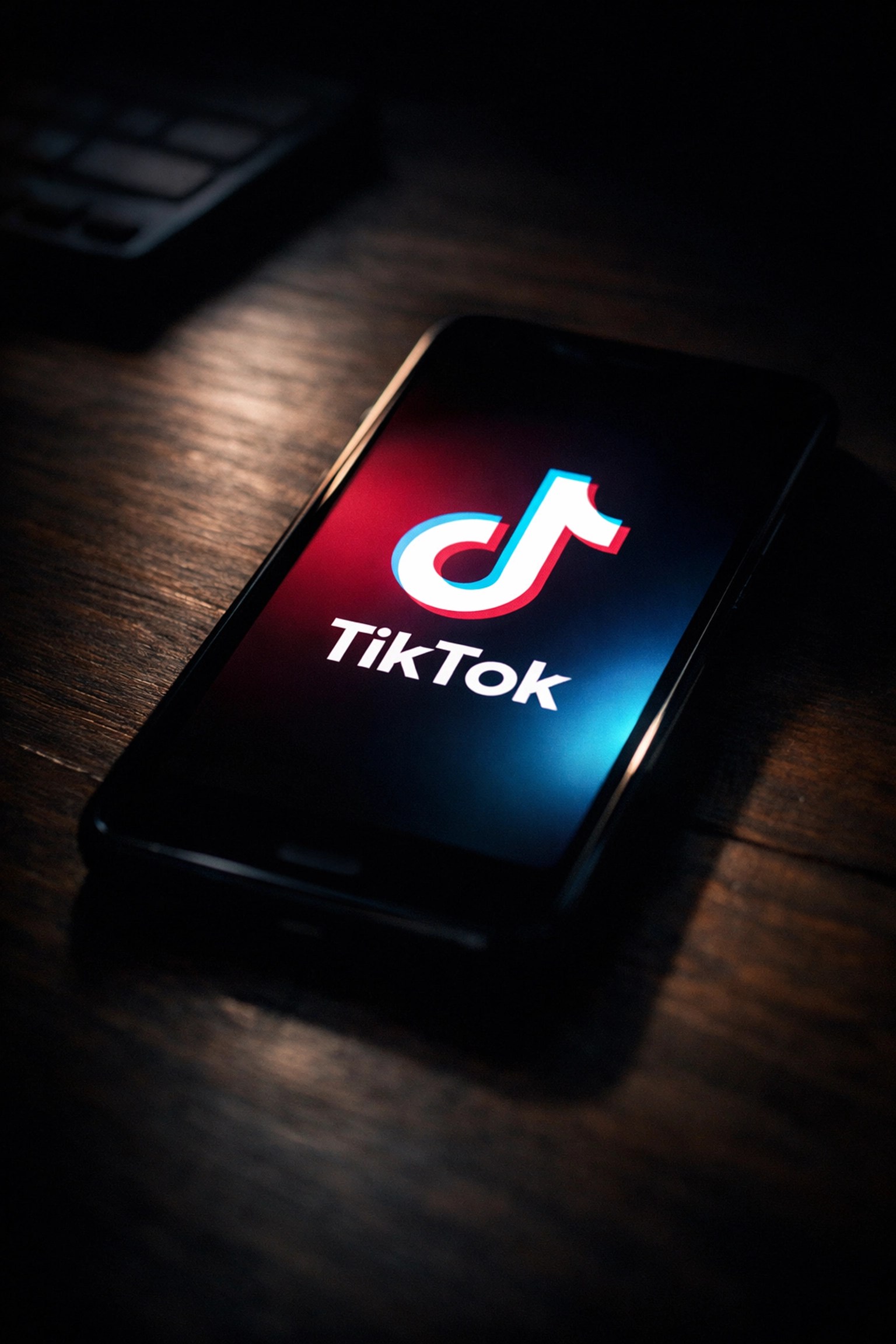
The plan is to feed it exclusively US user data, all stored in Oracle's cloud environment. No more global data pool. No more content recommendations influenced by what's trending in Jakarta or Berlin. Just pure, uncut American data, whatever that means.
The official line? This strips out China's content compliance controls and removes any algorithmic filters that might have been designed to manipulate US users. The algorithm gets a nice, clean, domestically-sourced diet. Your feed should feel "a little more local," with less international influence driving what you see next.
Sounds great in a press release. But here's where it gets interesting.
The Fine Print That Nobody's Reading
ByteDance still owns the algorithm. Let that sink in for a second.
Sure, they only have 19.9% of the company now, just under the 20% threshold that would trigger all sorts of regulatory red flags. But that "proprietary black box" everyone's been freaking out about? ByteDance retains ownership. The US entity doesn't get the keys to the castle; they get a license to use it.
It's like renting a car but the previous owner still has a copy of the key and can technically check your GPS history whenever they want. Comforting, right?

Experts are already pointing out the obvious problem: licensing terms matter. A lot. If ByteDance controls what can and can't be modified, how much power does the US entity actually have to change how recommendations work? Can they fundamentally alter the algorithm, or are they just tweaking the data inputs while the underlying machinery stays the same?
Nobody knows. And that's kind of the point.
The "Secret Sauce" Paradox
Here's the dirty secret that nobody wants to admit: no one really knows how the algorithm works. Not in any meaningful, transparent way. It's a neural network trained on billions of data points, constantly evolving, optimizing for engagement in ways that even its creators can't fully explain.
So when experts say they're "retraining it on US data," what does that actually mean? As one researcher bluntly put it, training on US data doesn't guarantee freedom from manipulation, it depends on "which data and what that US-sourced data even means for the content itself."
Are we talking about watch time? Shares? Comments? The stuff you don't watch? The videos you scroll past in 0.3 seconds? All of the above? And who decides what metrics matter?
The algorithm isn't some simple recipe you can tweak by swapping Chinese flour for American flour. It's a constantly learning system that reflects the biases, priorities, and optimization goals baked into its training. Change the data, sure, but if the fundamental architecture stays the same, and ByteDance owns that architecture, how much really changes?
Surveillance Theater Gets a Rebrand
Let's circle back to something we've talked about before on TechTime Radio: convenience is just surveillance with better branding.
TikTok's entire business model is built on knowing you better than you know yourself. That's not a Chinese thing or an American thing, that's a social media platform thing. Whether ByteDance or Oracle is holding the data doesn't change the fundamental equation: your attention is the product, and the algorithm is the tool that extracts it.

The national security argument was always about who has access to that surveillance apparatus, not whether the surveillance should exist in the first place. And now we're supposed to feel better because the surveillance is being rebranded with more stars and stripes?
Oracle's involvement adds another delicious layer of irony here. This is the same Oracle with deep ties to US intelligence agencies and government contracts. So we've gone from worrying about Chinese government access to… assuming American government access is totally fine? The data's still being collected. The algorithm's still optimizing for maximum engagement (read: addiction). We've just changed which flag is flying over the server farm.
What This Means for Users and Creators
If you're a TikTok creator, buckle up. The research suggests you should expect "metric fluctuations and unpredictable recommendations" in the short term. Translation: your carefully optimized posting schedule and hashtag strategy might suddenly stop working, and nobody's going to tell you why.
The algorithm is getting retrained, which means it's going to go through an awkward teenage phase where it doesn't quite know what it's doing. Your engagement might tank. Videos that would've blown up might disappear into the void. The For You Page lottery just got a whole lot more random.
And for users? Your feed might actually get worse. The magic of TikTok was always that it surfaced weird, niche content from around the world that you didn't know you wanted. If the algorithm gets "lobotomized" to focus only on US data, that global perspective disappears. You might end up in a more homogenous bubble, seeing the same trending sounds and formats recycled endlessly because that's what the US-only training data rewards.
Or maybe nothing changes at all, and this whole restructuring is just expensive corporate theater designed to appease politicians who were never going to understand the technology anyway.
The Whiskey Pairing: A Blended Mess
For this particular mess of geopolitical intrigue, algorithmic opacity, and corporate restructuring, I'm reaching for a blended whiskey. Not a single malt, not a pure bourbon, a blend. Because that's what we're dealing with here: a messy mix of US and Chinese interests, Oracle's cloud infrastructure mixed with ByteDance's proprietary code, national security concerns blended with good old-fashioned corporate profit motives.
Something like Ballantine's seems appropriate. It's a blend that tries to be all things to all people, smooth enough to go down easy but complex enough that you're never quite sure what you're tasting. Is that a hint of Chinese data collection? Or American surveillance capitalism? Who can tell anymore?
The Real Question
Strip away all the political posturing and corporate PR spin, and you're left with one fundamental question: Does changing who owns the data change what the data is used for?
TikTok's algorithm was never particularly nefarious because it was Chinese. It was concerning because it was incredibly effective at manipulating human behavior for profit. That doesn't change just because Oracle's logo is on the server rack now.
The "secret sauce" isn't getting lobotomized, it's getting rebranded. And we're all supposed to pretend that makes a difference.
Maybe the algorithm really will change. Maybe retraining on US data will fundamentally alter how content gets recommended, making it less addictive, more transparent, and somehow more "American" (whatever that means for an AI system). Or maybe we'll all keep scrolling through our feeds, getting served content optimized to keep us engaged for just one more video, and the only thing that's changed is which government has theoretical access to our viewing habits.
I know which scenario I'm betting on. And it's not the optimistic one.
Want more skeptical takes on the tech industry's latest nonsense? Check out our latest episodes at TechTime Radio where we dive deeper into the stories that make you go "hmmm."