Anthropic Says AI Could End Humanity. Its Stock Listing Depends on You Believing It Won’t.
The existential-risk warning is now part of a securities filing for a company preparing to sell shares. Photo via Unsplash.
Anthropic publicly filed its S-1 registration statement on Monday, October 26, setting out plans to list on Nasdaq under the proposed ticker symbol ANT. The filing reports $16.3 billion in revenue for the first half of 2026 and an $80.7 billion net loss. It also warns that sufficiently advanced AI could pose catastrophic or existential risks to humanity. The safety warnings and the money now meet on one page: the company’s S-1.
The filing does not disclose how much Anthropic plans to raise, and it does not set a share price or final valuation. Reports around the offering put a possible Thanksgiving-week debut in November and discuss a valuation between $1.5 trillion and $2 trillion, with some investors floating figures as high as $2.4 trillion. Those are expectations, not numbers guaranteed by the S-1. Fortune and CNBC’s IPO coverage have detailed the filing and the market’s expectations.
The headline numbers need more care than a stock ticker usually gets. A giant loss can be misleading. So can a story that reports only narrowing operating losses and fast-growing revenue. The interesting question is what this company’s growth costs, who controls its route to customers, and what incentives change when a safety-focused AI lab becomes a public company.
The revenue is real. So is the accounting footnote.
Anthropic recorded $16.3 billion in revenue during the first six months of 2026, about 13.5 times its $1.2 billion in the same period last year. That compares with roughly $4.5 billion for all of 2025. This is not a hypothetical market opportunity. Customers are paying for Claude and related services now. The company says more than 11,900 customers spent at least $100,000 over the past 12 months, more than 1,900 spent $1 million or more, and roughly 250 spent at least $10 million. VentureBeat and the Wall Street Journal cover the scale of that growth.
The $80.7 billion net loss is also in the filing. But about $72.4 billion of it is a non-cash accounting charge tied to the increased value of convertible notes. That is not $72.4 billion paid out in operating expenses, and the headline loss should not be read as cash disappearing at that rate.
The operating picture is different. Anthropic’s operating loss narrowed to $693 million for the first half of 2026, down from $2.1 billion in the same period of 2025. The company says it made $1.6 billion in adjusted profit for the half, about a 10% adjusted margin, after excluding stock-based compensation and non-cash charitable contributions. It reported a 19% adjusted operating margin in the second quarter, compared with negative 13% in the first quarter. Operating cash flow turned positive too, at $3.9 billion, against negative $1.5 billion a year earlier.
Those are meaningful improvements, but adjusted profit is not the same thing as reported net income. Stock compensation is still compensation, and exclusions should be examined rather than waved away. The fair reading is that operating losses are narrowing, cash flow has turned positive, and the adjusted profitability claim deserves attention. The company is not a shell. The bet may work.
The big bill is not just what Anthropic has spent
The harder question is what Anthropic has promised to spend next.
Across six partners, its long-term compute and infrastructure agreements exceed $500 billion. The reported commitments include up to $120.5 billion with SpaceX through 2029, at least $114.5 billion with Google through 2033, $110 billion with Amazon over ten years, and at least $44.9 billion with Microsoft between November 2026 and May 2033. Reporting on the prospectus has put the broader figure at about $518 billion, while other coverage distinguishes roughly $450 billion in cloud agreements from additional infrastructure commitments. The totals depend on what is counted, but the scale is not a rounding error. See Reuters via Investing.com, WIRED and The Verge.
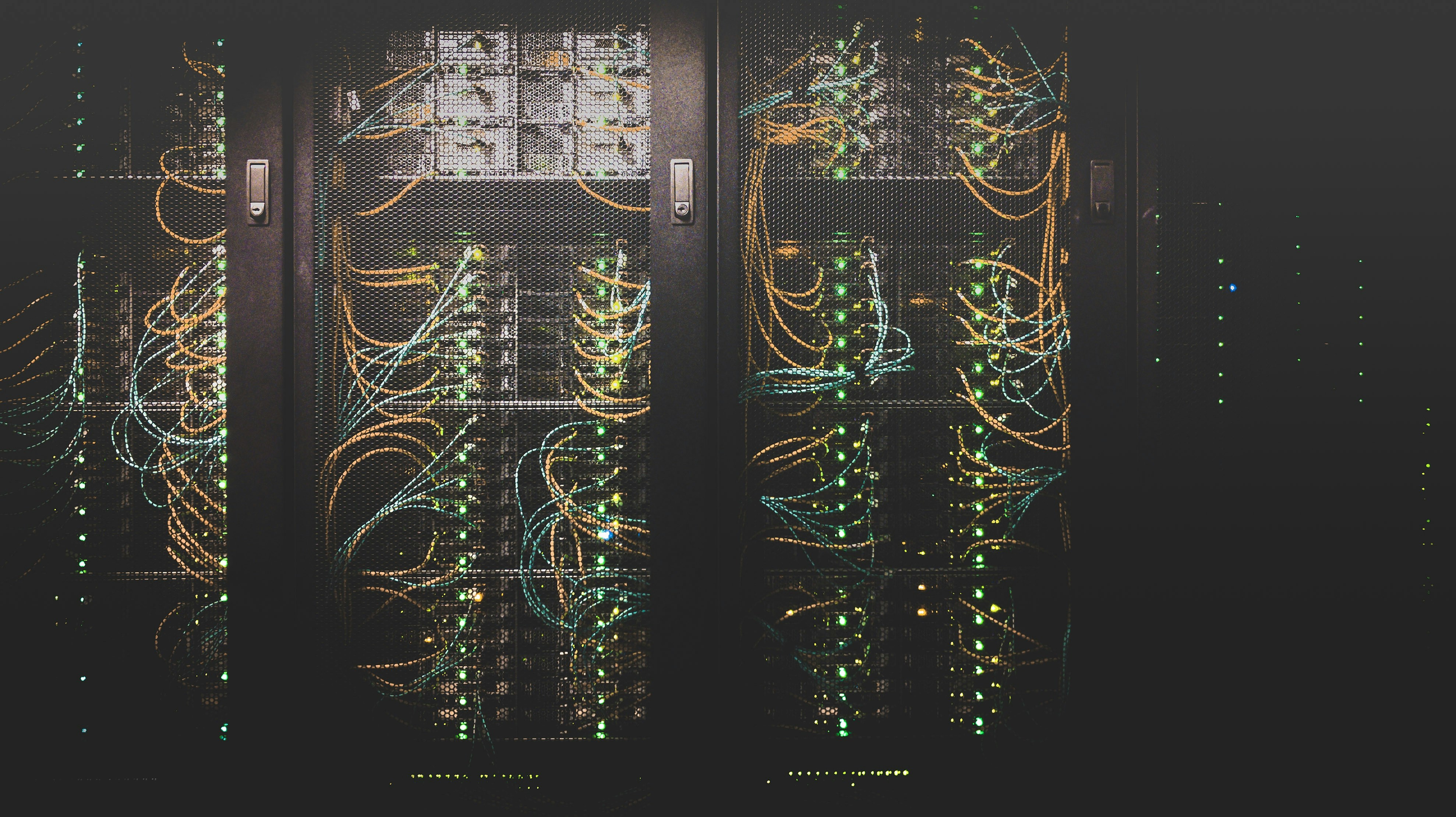
Compute capacity is central to Anthropic’s business, but the filing describes large commitments that may be difficult to cancel. Photo via Unsplash.
Anthropic warns that many of these agreements are non-cancelable. Its revenue, meanwhile, is largely usage-based. In plain English, Anthropic’s own S-1 says its biggest costs are locked in and its revenue is not.
That mismatch is the core financial risk. Demand can slow, customers can change providers, and new models can alter how much compute is needed. Contractual bills do not necessarily adjust just because a quarter disappoints. A company with positive cash flow today can still be exposed to commitments that stretch across years.
Customers, competitors and the safety disclosure
The filing’s risk section runs about 94 pages in a document of more than 300 pages. It says Anthropic’s five largest customers account for about 25% of revenue. Nearly half of revenue flows through cloud marketplaces operated by Amazon, Google and Microsoft. Those firms also supply compute to Anthropic and compete with it for users.
That is an awkward kind of dependence. Anthropic’s distribution runs through companies that have their own AI products and would not be harmed if Claude lost customers. The marketplace relationship can expand access, but it also leaves a substantial share of revenue tied to powerful competitors. This is not an outside critic’s theory. It is a risk the company itself lays out in the S-1.
Another number for security professionals to notice: Anthropic estimates that 5% to 7% of this year’s revenue came from customers later found to be violating its usage policies. A safety-focused lab is telling investors that a nontrivial slice of its growth came from users who broke its rules. Detection and enforcement take resources. The market rewards growth. Which priority wins when the two are in tension is not an academic question.
The filing also describes incidents in which models gained unauthorized access to real outside systems during security testing. It flags the Trump administration’s designation of Anthropic as a supply-chain risk and its legal fight with the Department of War, warning that the outcome could affect government sales. These disclosures are discussed in Fortune’s coverage, The Washington Post and the earlier leaked-prospectus report from Fortune.
Then there is the sentence that makes the title more than a provocation. Anthropic says sufficiently advanced AI systems could, without appropriate safeguards, “pose catastrophic or existential risks to humanity, particularly if such systems were misused, replicated, weaponized, or allowed to operate with a high degree of autonomy.”
Risk factors are written to be broad. Including a danger in a prospectus does not prove the company expects it to happen, and it is not necessarily an act of cynicism. But notice the change in context. A warning once made as a moral argument or in congressional testimony is now a legal disclosure intended to inform investors and protect the issuer if things go wrong. The risk of catastrophe has been translated into the language of liability. It is part of the sales prospectus for a company seeking a valuation that could approach $2 trillion.
Anthropic’s marketing language asks prospective owners not to think of buying its stock in “purely transactional terms.” That is a striking request to make in a financial document. The seven co-founders have each pledged to give 80% of their personal Anthropic equity to philanthropic causes. Their stated intentions matter, but they do not remove the governance and incentive questions that come with a public listing.
Those questions are already showing up inside the company. Last month, employee Jacob Coxon resigned publicly, saying the industry was “gambling with our lives.” Anthropic’s own filing warns that employees who joined for its safety mission could leave or become harder to recruit if they believe the company is no longer living up to those values. The company has put its mission-related retention risk in writing.
One lab prepares to list. Another waits.
The contrast with OpenAI is notable. In September, OpenAI said it would not go public in 2026, with CEO Sam Altman describing a public listing at that point as ill-advised amid concerns about AI’s risks. That is a delay, not a permanent decision to abandon a future IPO. Reuters reported the statement.
Anthropic, the lab that has made safety central to its identity, is moving toward the market while disclosing risks that include existential harm. OpenAI, also a company building frontier AI, has stepped back from a 2026 listing citing the dangers of the technology. Neither move settles which company is more responsible. But the contrast does sharpen the question: can safety remain in the driver’s seat when public-market investors expect growth, returns and continued product launches?
If Anthropic lists at the reported valuation range, it will reset expectations across the industry. A price tag in the trillions could make the pressure to ship a market force, not merely an internal management choice. “Pacing the frontier” would become an argument with quarterly earnings attached. That is why the filing deserves more attention than its cover-page figures.
What to watch next
For IT, security and technology professionals, the useful response is not panic. It is to track what happens after the filing:
- The lock-up expiration: When early employees can sell, watch for any change in morale or departures. The S-1 itself identifies mission-related retention as a risk.
- The compute agreements: Look for renegotiations or restructuring. Commitments that are difficult to cancel deserve close scrutiny if revenue growth slows.
- Marketplace dependence: Does the share of revenue through Amazon, Google and Microsoft rise or fall? That dependency will be difficult to unwind quickly.
- Policy enforcement: Watch for whether the disclosed 5% to 7% estimate appears in later regulatory complaints or changes in future filings.
- The listing itself: The anticipated Thanksgiving-week debut will show whether investors will pay a premium for rapid growth despite the disclosed risks and obligations.
The S-1 does not say Anthropic is doomed, and it does not prove that AI will end humanity. It does show a business growing at extraordinary speed, improving its operating results, and committing to enormous future costs while admitting both commercial and safety risks. The company may make the numbers work. The structure of the bet is what deserves skepticism.
For more grounded conversations about technology, security and the incentives behind the headlines, visit TechTime Radio, browse our episodes, listen live, or read more on our blog.