When Your Umbrella Loves You a Little Too Much: The Drone Stalking You in the Rain
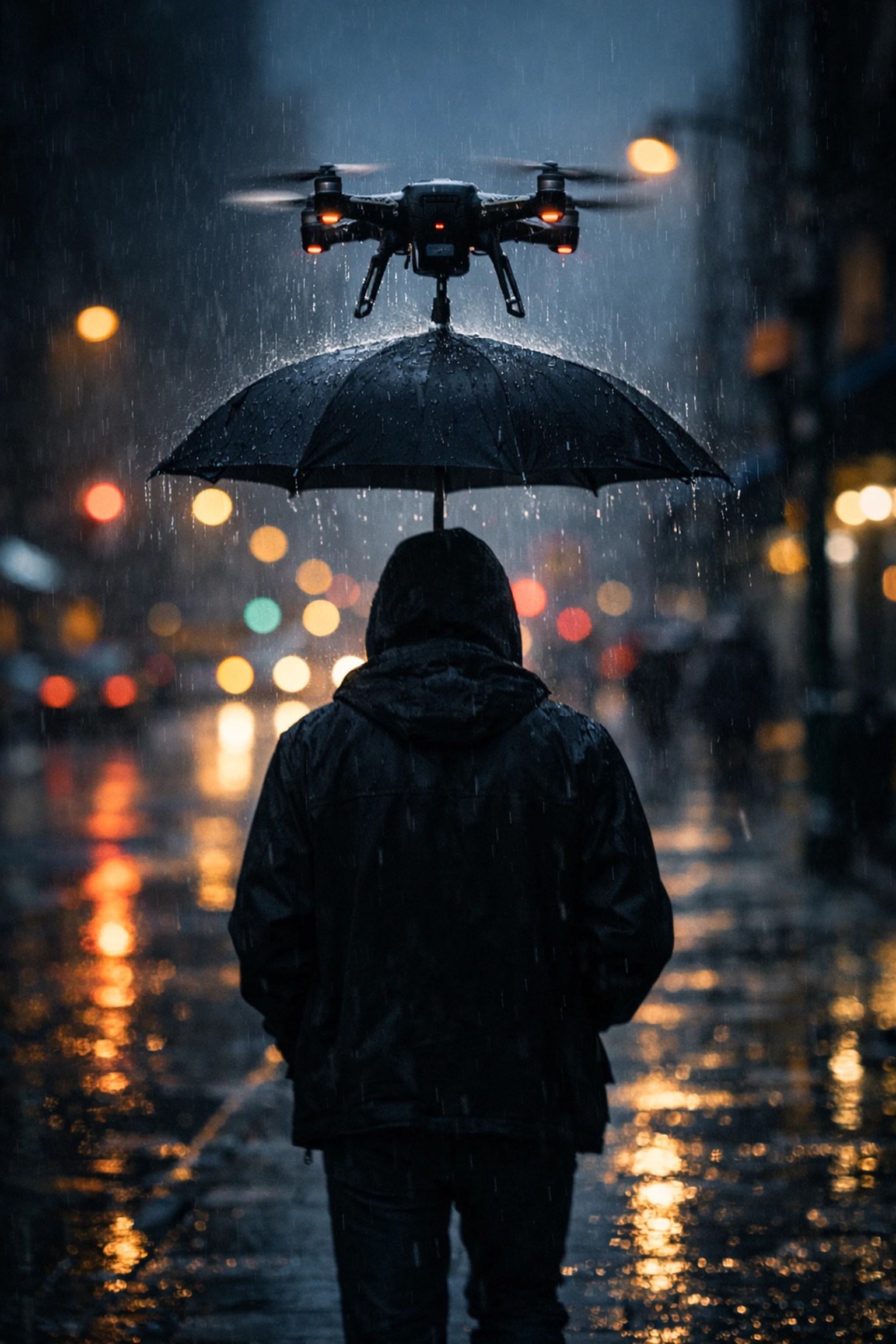
Meet the newest member of the "I didn't ask for this, but now I kind of want it" tech gadget family: an autonomous flying umbrella that follows you around like a weather-obsessed puppy.
Engineer and YouTuber John Tse has officially decided that holding an umbrella is beneath us as a species, so he strapped drone tech to a canopy and taught it to hover over your head like a loyal, buzzing rain-guardian. No straps, no handles, no dignity, just you, walking down the street with a tiny helicopter stalking your every move.
The Tech That Nobody Asked For (But Everyone's Watching)
Tse's latest update shows how he ditched the handheld controller and upgraded to a full tracking system, meaning this thing will follow you anywhere you go. And that's adorable… until you realize it doesn't actually know where you're going, it just chases you like a confused robot golden retriever.
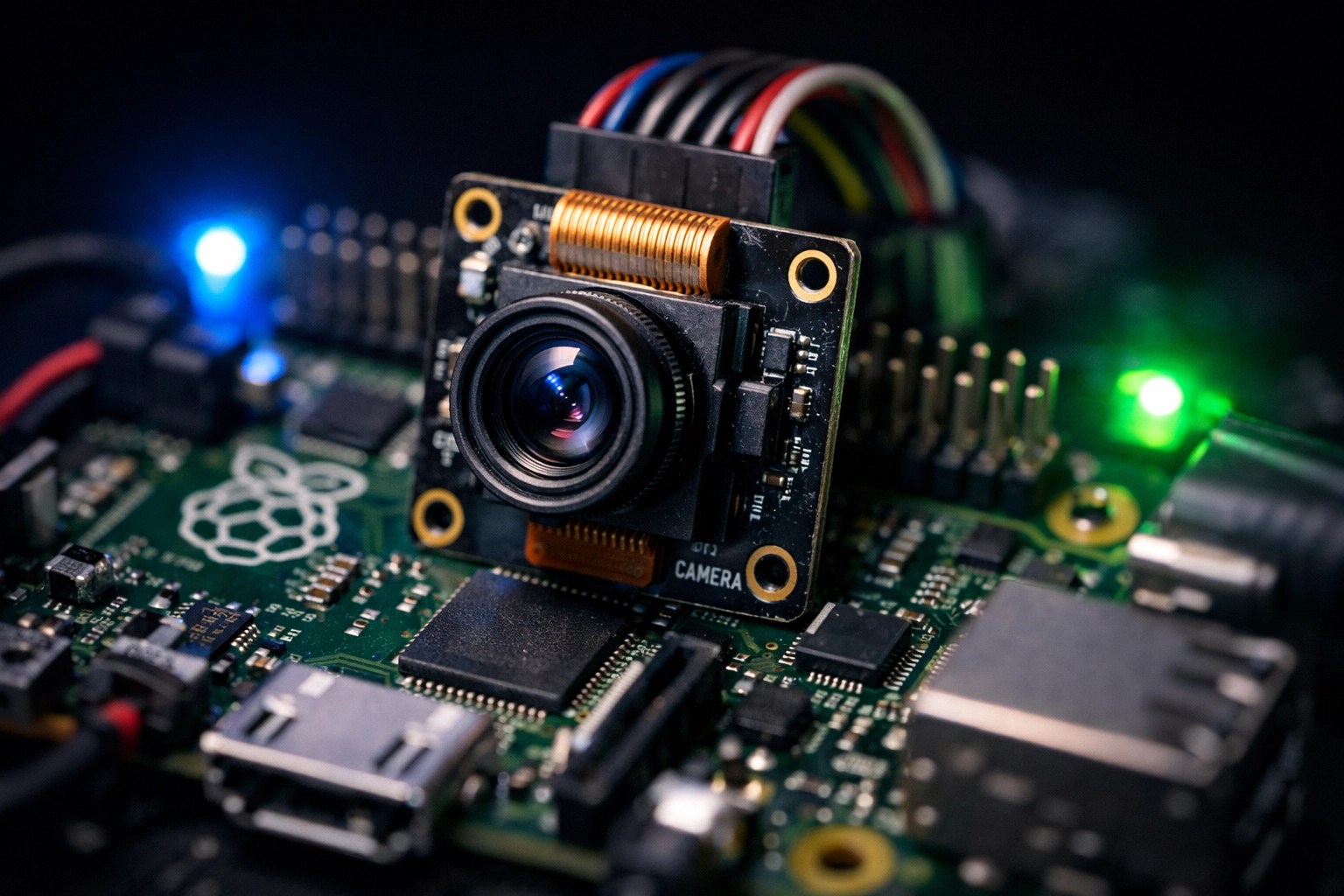
The system works through a time-of-flight depth camera mounted underneath the umbrella that creates a three-dimensional map of your position. A Raspberry Pi processes this depth data to pinpoint your head's location in real time, then communicates with a flight controller to keep the umbrella centered directly above you as you walk. Four propellers mounted on folding arms provide lift and stability, with the arms folding inward when not in use to keep the device compact.
Cameras, LiDAR, remote operators, he tried it all, and the umbrella still behaves like it's emotionally attached. Cute? Yes. Practical? Only if you're comfortable being shadowed by a flying saucer that thinks you're its parent, and protecting the rain behind you as you walk a few steps ahead of the umbrella.
The Year-Long Journey to Robot Umbrella Parenthood
What makes this version distinct from earlier prototypes is its autonomous operation. Earlier iterations required manual remote control via handheld controller, which severely limited practicality. I mean, if you're holding a controller to fly your umbrella, you might as well just… hold the umbrella.
After nearly a year of development and numerous failures including broken parts, software malfunctions, and system replacements, Tse achieved a functional autonomous model. That's right, a full year of engineering time to solve the problem of "my hands are tired from holding this stick with fabric on it."
But let's give credit where it's due: the technical achievement here is impressive. This is DIY engineering at its finest, showcasing how accessible drone technology and 3D printing have become. What was once confined to research laboratories with six-figure budgets is now something a dedicated creator can build in their garage.
The Fine Print (Or: Why This Isn't Replacing Your $15 Walgreens Special Anytime Soon)
Here's where the skeptic in me has to rain on this parade (pun absolutely intended):
Battery life is limited to 10 to 15 minutes per charge, comparable to small consumer drones. So unless your commute is shorter than a TikTok binge session, you're going to need a backup plan. Or multiple batteries. Or, you know, a regular umbrella.
Wind can affect stability, and heavy sideways rain reduces coverage effectiveness. For safety, the system hovers several meters above the user to keep fast-spinning propellers well clear of head height. So if the weather gets too gnarly, you know, the exact conditions where you'd actually need an umbrella, this thing becomes about as useful as a screen door on a submarine.
And let's talk about the elephant (or drone) in the room: you're walking around with a quadcopter hovering above your head making propeller noise. You're not getting coffee, you're performing a one-person drone show for every pedestrian on the block.
When Convenience Becomes Surveillance (With Propellers)
But hey, in a world where AI edits your photos, your fridge spies on your snacks, and your doorbell judges your neighbors, why shouldn't your umbrella develop a personality?

This is peak 2026 tech culture: solving problems that don't exist with solutions that create new problems. Sure, it's cool. Yes, it's innovative. But it's also a perfect metaphor for how we approach technology, throwing sensors, processors, and propellers at everyday objects until they become "smart" enough to follow us around like electronic puppies.
The umbrella doesn't just protect you from rain anymore. It tracks you. It monitors your position. It makes decisions about where you're going based on where you've been. Sound familiar? That's because it's the same playbook every other "smart" device is running.
Convenience is just surveillance with better branding, and now it comes with drone propellers.
The Real Question: Should vs. Could
The umbrella remains a DIY prototype rather than a commercial product, though it has garnered viral attention online. And that's probably for the best. Because the question isn't "can we make an autonomous flying umbrella?", clearly, we can. The question is "should we?"
Do we really need to offload the cognitive burden of holding an umbrella? Is that where we're at as a species? Walking is too easy, so now our rain protection needs to levitate?
Don't get me wrong, I'm not anti-innovation. The engineering here is legitimately impressive. The problem-solving, the iteration, the persistence through failures, that's all admirable. But sometimes the best engineering is knowing when to stop and say, "You know what? Maybe this one's fine the way it is."
This Week's Whiskey Pairing: When Technology Gets Blended
Speaking of things that probably shouldn't be mixed but somehow work anyway, this week's pairing is Ballantine's Blended Scotch.
Why blended Scotch for a drone umbrella? Because both are the result of taking multiple components that work fine on their own and combining them into something that's either genius or completely unnecessary, depending on your perspective.
Blended Scotch combines grain whiskies with malt whiskies to create something smoother and more accessible than either would be alone. The drone umbrella combines quadcopter tech with everyday rain protection to create something that's… well, definitely more complicated than either would be alone.
Ballantine's has been blending since 1827, which means they've had about 199 years more practice than John Tse. And yet somehow both arrive at the same conclusion: sometimes you need to mix things up to make something interesting, even if what you end up with isn't exactly "practical."
Pour it neat, add a single ice cube, and contemplate whether your umbrella really needs a flight plan.
Watch the Loyal Little Hover-Buddy in Action
If you want to see this loyal little hover-buddy in action (and trust me, it's worth watching just for the sheer absurdity), John Tse has documented the entire journey on his YouTube channel "I Build Stuff."
Check out the autonomous flying umbrella here: https://www.youtube.com/watch?v=EYRrUiM_A6g
The video walks through the technical challenges, the multiple iterations, and yes, plenty of footage of this thing following him around like a confused metallic guardian angel. It's part engineering documentary, part comedy sketch, and entirely worth your time if you enjoy watching someone solve problems that most people don't have.
The Bottom Line
Is the autonomous flying umbrella practical? Absolutely not. Is it innovative? Definitely. Is it a perfect example of how far DIY engineering has come in 2026? Without question.
Will I be first in line if this ever goes to production? Probably not, but I'll definitely watch from a safe distance as early adopters discover creative new ways for their rain protection to malfunction.
In the meantime, I'll stick with my $15 umbrella that doesn't need firmware updates, doesn't track my movements, and most importantly, doesn't make me look like I'm being chased by a very small UFO.
But if your umbrella starts showing signs of sentience or develops abandonment issues, at least now you know you're not alone.
For more skeptical takes on technology that makes you go "hmmm," check out the TechTime Radio blog or catch us on the latest episodes.
Tagged: Gadgets, Innovation, Consumer Tech, Drones, TechTime Radio