
Are Climate Tech Solutions Dead? Arctic Wildfires Prove We're Not Ready
Let's cut through the noise. Every time another wildfire tears through the Arctic or a heat dome settles over normally temperate regions, someone inevitably asks: "Where are all those miracle climate tech solutions we keep hearing about?" It's a fair question, especially when you consider the billions poured into everything from carbon capture moonshots to AI-powered forest monitoring systems.
But here's the thing: the question itself might be backwards.
The Real Numbers Behind the Hype
Before we declare climate tech dead in the water, let's look at what's actually happening with the money. And surprise: it's not what the headlines suggest.
VC investment in climate tech hit $7.6 billion in 2024, marking a 15% year-over-year increase. That doesn't exactly scream "dead sector." Yet somehow, the broader narrative focuses on the 29% decline in overall climate tech financing, which dropped to $56 billion in 2024.
What's really happening is market consolidation, not collapse. The sector experienced dramatic swings throughout 2025: funding dropped nearly 50% from Q1 to Q2, hitting $5.9 billion in Q2. But this volatility reflects investor selectivity rather than a fundamental failure of climate technology.
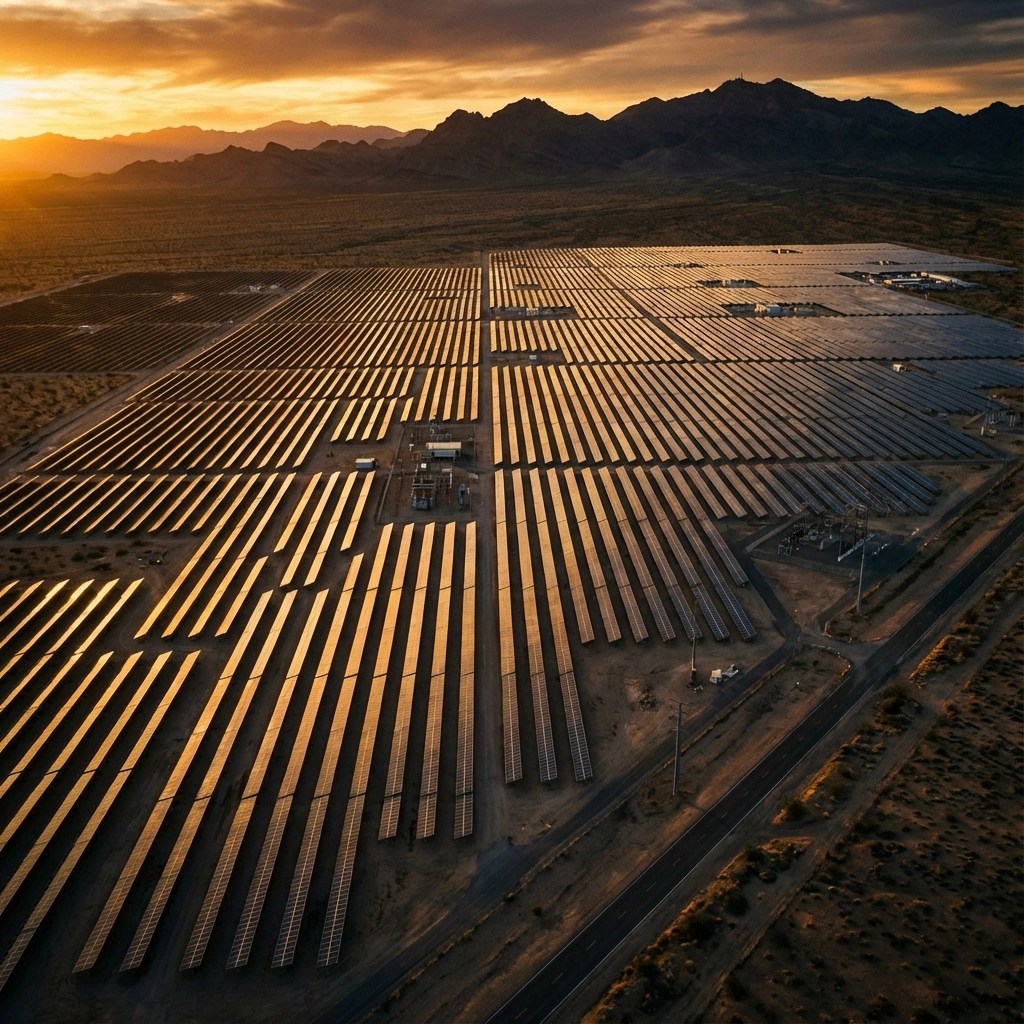
Energy remains the backbone, accounting for 34% of total funding and 42% of all equity deals. When half the world is scrambling to power AI data centers without melting the planet, proven technologies like solar and battery systems suddenly look a lot more attractive to investors.
Why "Dead" Misses the Point Entirely
Here's where the skepticism should kick in: not about climate tech's viability, but about our expectations of what technology can and should do.
The current market shift represents what industry observers diplomatically call a transition from "rapid growth" to "quiet resilience." Translation: the easy money phase is over, and now investors want to see actual results, not just compelling PowerPoints about saving the world.
This isn't necessarily bad news. Capital is flowing more deliberately toward technologies with proven commercial viability rather than speculative moonshots that promise to solve climate change with revolutionary breakthroughs that somehow never materialize.

Take carbon capture technology. It's advancing from pilot projects to commercial-scale operations, but the timeline for meaningful impact remains frustratingly long. Data-center decarbonization is gaining serious traction as startups scramble to address AI infrastructure's exponentially expanding energy footprint. African climate tech is accessing new regional funding mechanisms, suggesting geographic diversification of both investment and innovation.
But let's be honest: these developments reflect incremental progress in a system that might need revolutionary change.
The Inconvenient Math Problem
Nature-based solutions can theoretically provide up to 30% of the mitigation needed to limit warming to 1.5°C by 2030. Yet they receive only 1.5% of public international funding. That's not a technology problem: it's a deployment and prioritization problem.
The real constraint isn't whether climate tech works. It's whether we can deploy it fast enough and at sufficient scale to matter. There's a critical funding gap in what investors call the "$45-$100 million commercial-ready segment," where proven technologies struggle to secure money for first-of-a-kind deployment.

This gap reveals something uncomfortable: we're pretty good at developing climate solutions, but terrible at scaling them. The technology exists to significantly reduce emissions from transportation, energy generation, and industrial processes. What doesn't exist is the financial and regulatory infrastructure to deploy these solutions at the speed and scale required.
The Policy Uncertainty Wild Card
Fifty percent of climate tech investors cite regulatory uncertainty as their top concern through 2026. That's a polite way of saying nobody knows what the rules will be next year, making long-term infrastructure investments feel like expensive gambling.
Policy uncertainty creates a vicious cycle. Investors hesitate to fund large-scale deployments without clear regulatory frameworks. Regulators hesitate to create frameworks without proven technologies at scale. Meanwhile, the climate keeps warming, and Arctic wildfires keep burning.
This uncertainty particularly affects emerging technologies that require significant regulatory approval or policy support. Advanced nuclear reactors, direct air capture systems, and large-scale renewable hydrogen projects all face extended timelines partly because of regulatory ambiguity.
What Arctic Wildfires Actually Prove
Arctic wildfires don't prove climate tech is dead: they prove we're running out of time for gradual solutions.
The uncomfortable reality is that even the most optimistic climate tech deployment scenarios struggle to keep pace with accelerating climate impacts. We're essentially trying to solve a compound interest problem (exponential climate impacts) with linear solutions (gradual technology deployment).
This doesn't mean climate tech is worthless. It means our expectations might be unrealistic. Technology alone was never going to solve climate change, especially not on the timelines that physics demands.
The Maturation Reality Check
The climate tech sector is experiencing what every technology sector eventually faces: the transition from hype-driven growth to results-driven sustainability. The dot-com boom didn't kill internet technology: it separated viable companies from unsustainable fantasies.
Similarly, current climate tech consolidation is sorting proven solutions from speculative promises. Energy storage, solar manufacturing, and electric vehicle infrastructure are attracting steady investment because they generate measurable returns. Atmospheric carbon removal and fusion energy face more skeptical investors because their commercial viability remains theoretical.
This maturation process is necessary but insufficient. Even the most successful climate technologies need deployment at unprecedented scales to meaningfully impact global emissions.
The Bottom Line
Climate tech solutions aren't dead, but they're not miracle cures either. The sector is evolving from speculative investment to disciplined deployment, which is probably healthy for long-term sustainability but frustrating for anyone hoping technology would solve climate change quickly.
Arctic wildfires underscore the urgency of accelerating deployment and solving the funding, policy, and scale challenges that prevent proven solutions from expanding rapidly enough. The technology largely exists. The real question is whether we can build the systems to deploy it fast enough to matter.
That's a much harder problem than inventing new gadgets, and it's one that Silicon Valley's "move fast and break things" mentality isn't particularly well-suited to solve.
Maybe the real question isn't whether climate tech is dead, but whether our approach to deploying it is fundamentally mismatched to the scale and speed of the problem we're trying to solve.