
Quantum Communication Breakthrough Vs. Your Privacy: Which Is Better For Your Security?
Look, we need to talk about this whole quantum communication thing that's been making waves in tech circles. Everyone's acting like it's some kind of privacy savior, but I've been around tech long enough to know that every "breakthrough" comes with a catch. So let's cut through the marketing fluff and figure out what's really going on here.
First off, the question itself is kind of misleading. It's not really quantum communication versus your privacy, it's more like quantum communication is supposedly the knight in shining armor coming to save your privacy from an even bigger threat. But before we crown any heroes, let's look at what we're actually dealing with.
The Current Security Mess We're In
Right now, your online security depends on encryption that's basically mathematical puzzles. RSA, ECC, AES, these are the acronyms that keep your banking info, personal messages, and embarrassing search history safe from prying eyes. And for decades, they've done a pretty good job.
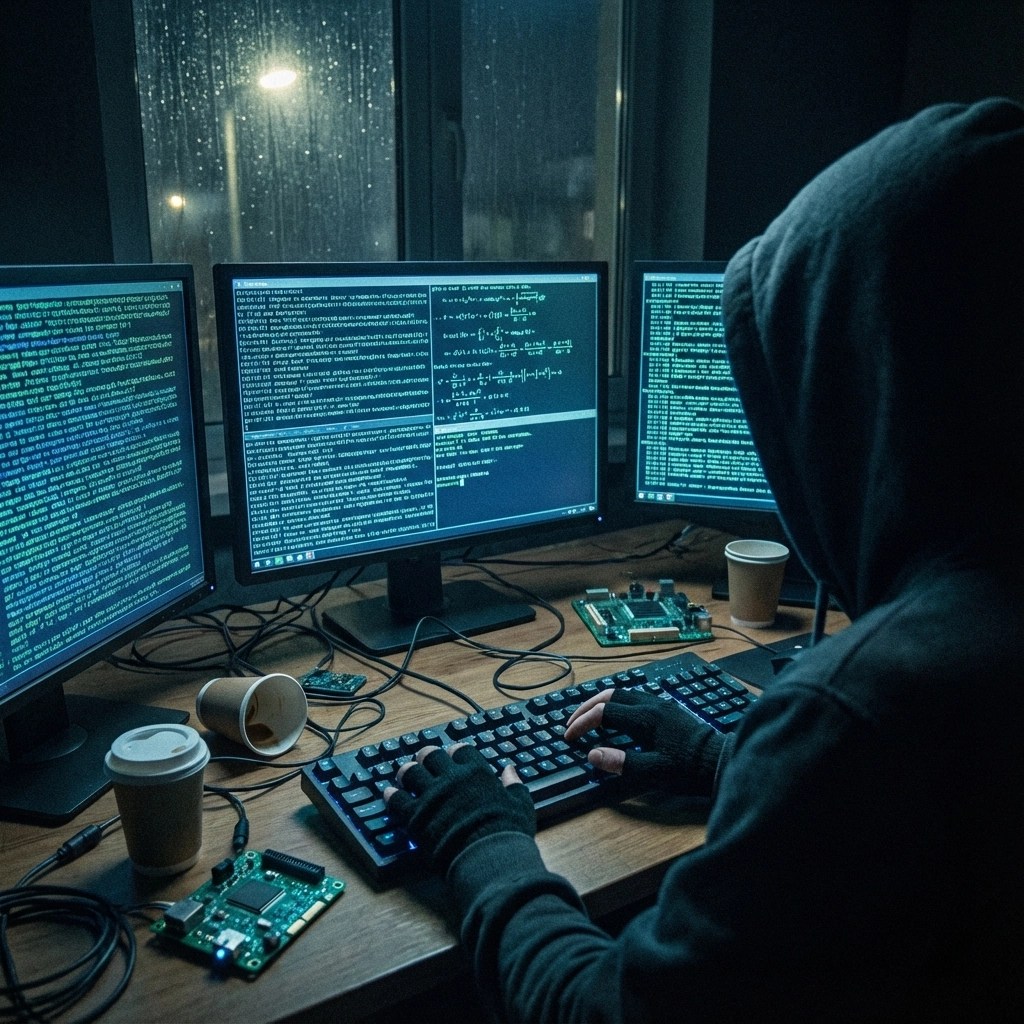
But here's the kicker: quantum computers are coming, and they're going to crack these encryption methods like a teenager breaking into their parents' WiFi password. We're talking about Shor's algorithm making RSA and ECC encryption look like a paper lock on a bank vault. Even AES-128 encryption would basically become half as strong overnight.
Now, I know what you're thinking, "Nathan, quantum computers are still experimental, right?" Wrong. Well, partially wrong. While we don't have massive quantum computers in every hacker's basement yet, the threat is real enough that governments and major corporations are already panicking about it. The NSA has been screaming about this for years, telling everyone to prepare for "Y2Q", the year quantum computers break current encryption.
And it's not just about some future theoretical attack. Any data being collected and stored today could be decrypted later when quantum computers become powerful enough. So if someone's recording your encrypted communications now, they might be able to read them in 10-15 years. That's a fun thought to keep you up at night.
Enter the Quantum Communication "Solution"
So along comes quantum communication, promising to save the day. The pitch sounds pretty amazing: instead of relying on math problems that quantum computers can solve, we use the weird properties of quantum physics itself to secure communications.
The basic idea is quantum entanglement, two particles that are mysteriously connected, so if you mess with one, the other changes instantly, no matter how far apart they are. Einstein famously called this "spooky action at a distance" because even he thought it was weird.
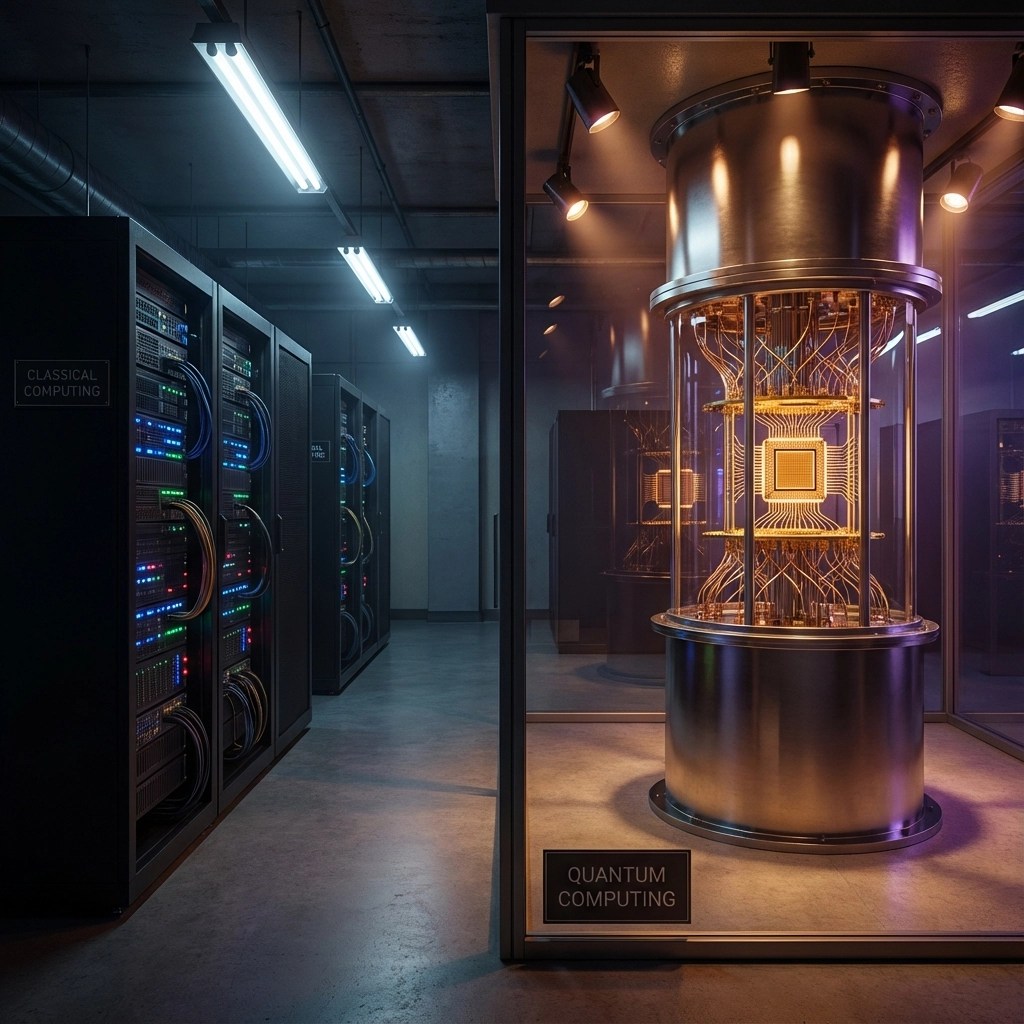
In quantum communication, this translates to something called Quantum Key Distribution (QKD). The theory is that you can share encryption keys in a way that if anyone tries to intercept them, the quantum state changes and you know immediately that someone's been snooping. It's like having a seal that breaks if anyone other than you opens the envelope.
There's also something called quantum teleportation (no, not the Star Trek kind), where quantum information can be transmitted without the actual data ever existing in the network infrastructure. Even if hackers compromise every router between you and your destination, they still can't access the quantum data.
Sounds pretty bulletproof, right? Well, hold your horses.
Reality Check: Implementation Problems
Here's where my skepticism kicks in. All of this quantum communication stuff sounds great in the lab, but real-world implementation is where things get messy.
First, current quantum communication systems have some serious limitations. QKD only works over relatively short distances unless you use trusted relay nodes: which kind of defeats the "unhackable" promise if you have to trust a bunch of intermediate points not to be compromised.

Second, researchers have already found vulnerabilities in quantum systems. There are something called "crosstalk attacks" where malicious users can mess with other people's quantum computations in cloud-based quantum computers. So much for perfect security.
Third, the infrastructure requirements are insane. We're talking about specialized hardware, extremely controlled environments, and costs that make current cybersecurity budgets look like pocket change. How many businesses are really going to be able to afford true quantum-safe communication systems?
And let's be honest: when has any new technology ever been deployed without bugs, backdoors, or unforeseen vulnerabilities? Remember when WEP WiFi security was supposed to be unbreakable? Or when SSL certificates were foolproof? Technology has a funny way of being less perfect than the initial hype suggests.
What This Means for Regular People
Here's the thing that really bothers me about all this quantum communication hype: it's mostly irrelevant for regular consumers right now. While tech companies and governments are having anxiety attacks about quantum threats, your biggest security risks are still the same old boring stuff.
Your password is probably "password123" or your dog's name. You're clicking on phishing emails. You're using public WiFi for banking. You have malware on your computer because you downloaded something sketchy. These are the real threats you should be worrying about, not some theoretical quantum computer that might break your encryption in a decade.
The quantum communication breakthrough isn't going to protect you from social engineering, credential stuffing attacks, or that sketchy browser extension you installed last month. It's a solution to a very specific, very advanced threat that most people will never encounter.
Don't get me wrong: I'm not saying quantum threats aren't real. They are. But for the average person, focusing on quantum-safe communication while ignoring basic security hygiene is like buying a bulletproof vest while leaving your front door wide open.
The Hybrid Approach (Or: Hedging Your Bets)
The smart money is on something called hybrid approaches: combining traditional post-quantum cryptography with quantum communication systems. This way, even if one method gets compromised, you still have backup protection.
This actually makes sense from a security standpoint. Redundancy is good. Having multiple layers of protection is good. But it also means we're talking about even more complexity, more cost, and more potential points of failure.
The organizations that are serious about this stuff: government agencies, major financial institutions, critical infrastructure operators: are already starting to implement post-quantum cryptography alongside planning for quantum communication capabilities. They're not waiting for the perfect quantum solution; they're building defense in depth.
The Bottom Line
So, quantum communication breakthrough versus your privacy: which is better for your security? It's the wrong question because they're not competing against each other.
The real question is whether quantum communication will live up to its promises or become another overhyped technology that costs a fortune to implement and still has vulnerabilities that nobody saw coming.
My take? Quantum communication will probably become an important tool for high-value, high-risk communications. But it's going to be expensive, complex, and limited in scope for years to come. For most people, focusing on basic security practices will provide much better protection than waiting for quantum saviors.
The organizations that need quantum-level security already know who they are and are working on solutions. For everyone else, this is more of an interesting technology to watch than something to lose sleep over.
Just don't let all the quantum hype distract you from the fact that most security breaches still happen because someone fell for a phishing email or used the same password on fifty different websites. Fix those problems first, then worry about quantum threats.
And remember: in tech, the more revolutionary something sounds, the more skeptical you should be about the timeline and promises. Quantum communication might change everything eventually, but "eventually" in tech time usually means longer than anyone wants to admit.