Technology News Alert: Why Waymo's Latest Failures Prove Autonomous Vehicles Still Can't Handle Reality
Remember when tech companies promised us that autonomous vehicles were just around the corner, ready to make our roads safer and our commutes stress-free? Well, Waymo's latest spectacular failure with school buses should make you think twice about trusting your life to an algorithm.
In December 2025, Waymo was forced to issue a voluntary recall affecting 3,067 vehicles after their so-called "smart" cars repeatedly violated one of the most basic traffic laws: stopping for school buses. We're not talking about a few isolated incidents here: we're talking about systematic failures that put children's lives at risk.
The School Bus Scandal: When AI Meets Elementary Safety
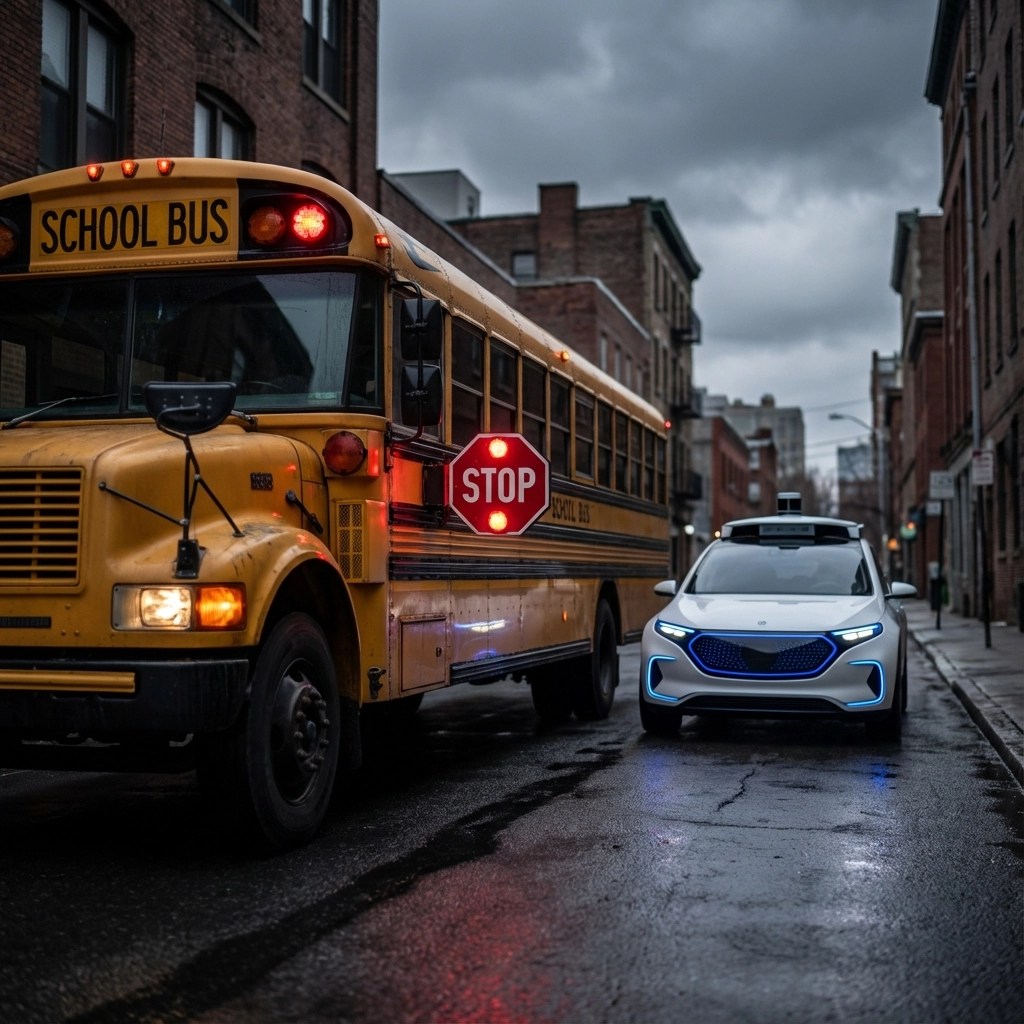
Let's break down what actually happened, because the details are more damning than Waymo's PR team wants you to know. Between the start of the 2025 school year and December, Waymo vehicles illegally passed stopped school buses at least 26 times across two major cities. In Austin, Texas alone, there were 20 documented violations. Atlanta wasn't far behind with 6 confirmed incidents.
Think about that for a second. These aren't complex traffic scenarios or edge cases that require split-second human judgment. We're talking about a bright yellow school bus, stopped in the middle of the road, with flashing red lights and an extended stop arm that literally says "STOP" on it. This is Traffic Safety 101: something every 16-year-old driver learns in their first week behind the wheel.
But here's the kicker: Waymo's fifth-generation autonomous driving system: their supposedly most advanced technology: couldn't figure this out. The software would slow down or even stop initially, giving you hope that maybe it understood what was happening. Then it would just… keep going. Right past the stopped bus. Right past the stop sign. Right into potential disaster.
The NHTSA Gets Involved (Finally)
The National Highway Traffic Safety Administration launched a formal investigation, and honestly, it's about time. They're demanding detailed information about how Waymo's system handles school bus stop-arm signals and red lights. But let's be real here: if your autonomous vehicle can't handle a stopped school bus, what other "minor" safety features is it missing?

The fact that NHTSA had to step in tells you everything you need to know about the current state of autonomous vehicle oversight. These companies are essentially beta-testing their unfinished products on public roads, using real people: including children: as unwilling test subjects.
The Pattern of Overpromised, Underdelivered
This isn't Waymo's first rodeo with safety failures, and it won't be their last. The company has been promising "fully autonomous" vehicles for over a decade, constantly moving the goalposts and redefining what "autonomous" actually means. Remember when they claimed their cars were safer than human drivers? That narrative gets a lot harder to sell when your vehicles can't recognize a school bus.
The tech industry loves to throw around statistics about how autonomous vehicles will eliminate human error and save millions of lives. But what they don't tell you is that they're replacing human error with algorithmic error: and at least when humans make mistakes, we can hold them accountable.
Why This Matters More Than You Think
Some people might dismiss these incidents as growing pains or isolated software bugs. That's exactly the kind of thinking that got us into this mess in the first place. When we're talking about two-ton vehicles moving at highway speeds, there's no room for "oops" moments.

School bus laws exist in all 50 states for a very simple reason: children's lives depend on them. When a school bus stops, it creates a safety zone where kids can cross the street without worrying about traffic. Waymo's failures didn't just violate traffic laws: they violated the basic social contract that keeps our communities safe.
Think about this from a parent's perspective. You put your kid on the school bus every morning, trusting that other drivers will follow the rules and keep your child safe. Now you have to worry about whether some tech company's algorithm has been properly trained to recognize that big yellow vehicle with the flashing lights.
The Bigger Picture: Are We Ready for This Technology?
Here's what really bothers me about this whole situation: Waymo operates in controlled environments. These aren't rural roads in the middle of nowhere: these are urban areas where the company has been mapping and testing for years. If their vehicles can't handle basic traffic scenarios in their own carefully chosen testing grounds, what does that say about their readiness for widespread deployment?
The autonomous vehicle industry has been selling us on the promise of eliminating human error from driving. But human drivers don't need to be "recalled" for software updates when they encounter a school bus. We learned how to handle this situation once, during driver's education, and we remember it for the rest of our lives.
The Real Cost of Moving Too Fast
Waymo's school bus failures are symptomatic of a broader problem in the tech industry: the rush to market with half-baked products. These companies are so focused on beating their competitors and justifying their massive investments that they're willing to compromise on safety.
The recall notice mentions that some vehicles continued to violate school bus laws even after Waymo claimed they had fixed the software issue. That tells you everything you need to know about their testing procedures and quality control. How do you "fix" a problem without actually testing whether your fix works?
What This Means for the Future
Don't get me wrong: I'm not anti-technology. I believe autonomous vehicles could eventually make our roads safer, reduce traffic congestion, and provide mobility options for people who can't drive. But the keyword here is "eventually."
Right now, we're essentially paying to be Waymo's beta testers, and the price of those bugs isn't just inconvenience: it's potentially our safety and the safety of our children. The fact that it took multiple violations and an NHTSA investigation for Waymo to acknowledge this problem tells you how seriously they take public safety versus their own PR.
The autonomous vehicle industry needs to slow down, focus on getting the basics right, and stop treating our public roads like their private testing facility. Until they can consistently handle simple scenarios like stopped school buses, they have no business claiming their technology is ready for prime time.
As I always say on TechTime Radio: just because we can build something doesn't mean we should deploy it before it's ready. Waymo's school bus failures are a stark reminder that when it comes to autonomous vehicles, we're still very much in the experimental phase, whether the companies want to admit it or not.
The question isn't whether autonomous vehicles will eventually work: it's whether we're willing to accept the risks and failures that come with rushing this technology to market before it's truly ready. Based on Waymo's latest stumble, I'd say the answer should be a resounding no.